Choosing the best material for kitchen countertops is one of the most important decisions in any kitchen renovation. Countertops impact daily cooking, cleaning routines, home value, and overall kitchen style. With so many materials available today, homeowners often struggle to decide which surface offers the best balance of durability, appearance, cost, and maintenance.
This complete guide breaks down every major countertop material, compares performance factors, and helps you select the best option based on your lifestyle and budget. Whether you are remodeling your kitchen or building a new home, this article will give you everything you need to make a confident decision.
What Makes a Countertop Material the Best?
There is no universal “one size fits all” countertop. The best kitchen countertop material depends on several key factors.
Durability
A quality countertop should resist scratches, chips, cracks, and daily wear. Kitchens experience heavy use, heat exposure, and moisture, so durability is critical.
Maintenance Requirements
Some materials require sealing and special cleaners while others only need basic wiping. Low maintenance surfaces are popular for busy households.
Heat and Stain Resistance
Hot cookware and food spills are common in kitchens. Materials that resist heat damage and staining perform better long-term.
Appearance and Style
Your countertop should match your kitchen design and personal style. Color options, patterns, and finish quality all matter.
Cost and Value
Price includes material cost, fabrication, and installation. The best material balances affordability with long-term value.
Quick Comparison of Popular Countertop Materials
Here is a quick overview of the most common kitchen countertop materials and what they are best known for:
Quartz – Best overall for durability and low maintenance
Granite – Best natural stone option
Marble – Best luxury appearance
Butcher Block – Best warm and natural look
Laminate – Best budget countertop
Solid Surface – Best seamless modern design
Concrete – Best custom and industrial kitchens
Stainless Steel – Best hygienic surface
Tile – Best DIY-friendly option
Now let’s explore each material in detail.
Quartz Countertops: Best Overall Choice
Quartz countertops are engineered stone surfaces made from natural quartz combined with resin binders. They have become the most popular kitchen countertop material in recent years.
Advantages of Quartz Countertops
- Non-porous surface prevents stains and bacteria
- No sealing required
- Extremely durable and scratch resistant
- Wide range of colors and patterns
- Consistent appearance across slabs
- Resistant to moisture and spills
Disadvantages of Quartz Countertops
- Higher cost than laminate
- Can be damaged by extreme heat
- Not recommended for outdoor kitchens
Why Quartz Is the Best Material for Kitchen Countertops
Quartz offers the best balance of performance, appearance, and convenience. It provides the look of natural stone with far less maintenance. Homeowners prefer quartz because it stays beautiful with minimal effort and holds up well under daily use.
For most households, quartz is the top choice.
Granite Countertops: Best Natural Stone Option
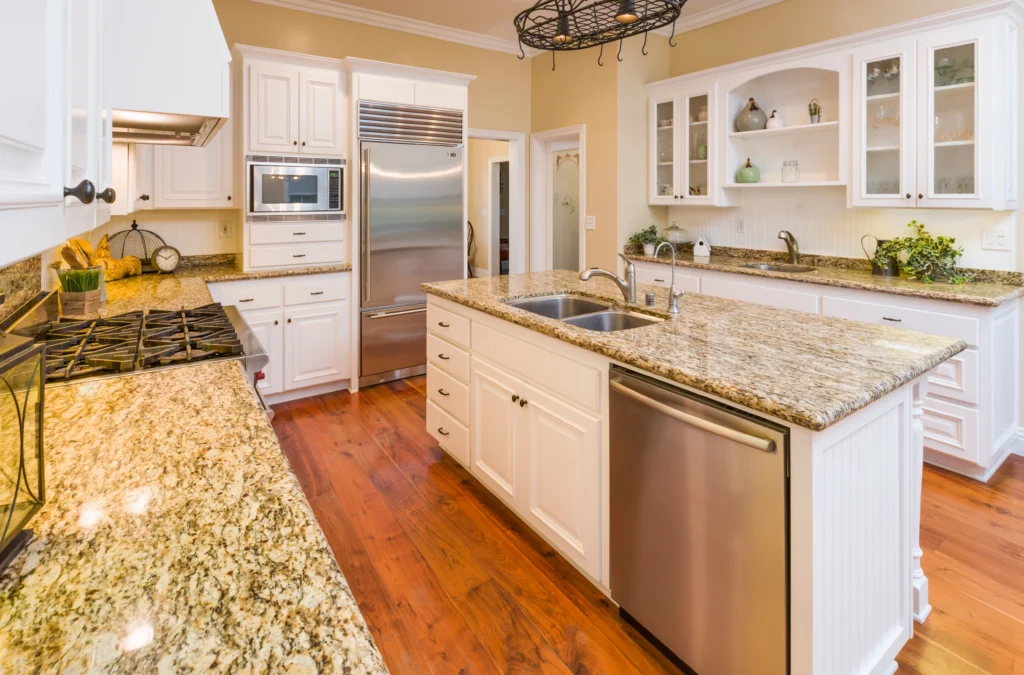
Granite is a natural stone cut from quarries and polished into slabs. Each granite countertop has unique veining and color patterns.
Advantages of Granite Countertops
- Heat resistant surface
- Natural beauty and uniqueness
- Strong and long-lasting
- Adds resale value to homes
Disadvantages of Granite Countertops
- Requires sealing every 1 to 2 years
- Can stain if not properly sealed
- Heavy and requires professional installation
- Higher upfront cost
Who Should Choose Granite?
Granite is ideal for homeowners who love natural stone and want a classic high-end kitchen look. It works well for people who cook often and want heat resistance.
Marble Countertops: Best for Luxury Kitchens
Marble is known for its elegant veining and premium appearance. It is commonly used in high-end kitchens and baking stations.
Advantages of Marble Countertops
- Beautiful natural patterns
- Cool surface for pastry and baking
- Adds upscale appeal
Disadvantages of Marble Countertops
- Easily scratched
- Prone to staining
- Requires frequent sealing
- High maintenance
When Marble Makes Sense
Marble is best for homeowners who prioritize aesthetics and are willing to invest time in maintenance. It works well in low-traffic kitchens or decorative island surfaces.
Butcher Block Countertops: Best Natural Wood Option
Butcher block countertops are made from hardwood pieces bonded together. They bring warmth and character to kitchens.
Advantages of Butcher Block
- Warm and natural appearance
- Affordable compared to stone
- Can be sanded and refinished
- Comfortable surface for food prep
Disadvantages of Butcher Block
- Requires regular oiling
- Vulnerable to water damage
- Can scratch and dent
- Not heat resistant
Who Should Choose the Butcher Block?
Butcher block is perfect for farmhouse kitchens, rustic designs, and homeowners who like natural textures and hands-on maintenance.
Laminate Countertops: Best Budget-Friendly Option
Laminate countertops consist of a plastic surface bonded to a particleboard base. They offer affordable design flexibility.
Advantages of Laminate Countertops
- Low cost
- Wide color and pattern variety
- Easy installation
- Lightweight
Disadvantages of Laminate Countertops
- Easily damaged by heat
- Can chip and peel
- Lower durability
- Lower resale value
When Laminate Is the Right Choice
Laminate works well for rental properties, temporary renovations, and homeowners on tight budgets.

Solid Surface Countertops: Best Seamless Design
Solid surface countertops are man-made materials such as acrylic blends that create smooth, continuous surfaces.
Advantages of Solid Surface
- Seamless joints
- Non-porous
- Easy cleaning
- Repairable scratches
Disadvantages of Solid Surface
- Lower heat resistance
- Can scratch easily
- Limited stone-like appearance
Best Use Cases
Solid surface countertops are ideal for modern kitchens and homeowners who want integrated sinks and smooth surfaces.
Concrete Countertops: Best Custom Option
Concrete countertops offer complete design customization including color, shape, and finish.
Advantages of Concrete
- Customizable appearance
- Modern industrial style
- Heat resistant
- Strong and durable
Disadvantages of Concrete
- Requires sealing
- Heavy weight
- Can crack over time
- Higher installation cost
Who Should Choose Concrete?
Concrete works best for modern kitchens and homeowners seeking unique, bold designs.
Stainless Steel Countertops: Best for Hygiene
Stainless steel is widely used in professional kitchens due to its hygienic properties.
Advantages of Stainless Steel
- Resistant to heat and stains
- Easy to sanitize
- Durable
- Professional appearance
Disadvantages of Stainless Steel
- Shows fingerprints
- Can scratch
- Noisy surface
- Industrial look not for everyone
Ideal Users
Serious home cooks and modern kitchen owners benefit most from stainless steel countertops.
Tile Countertops: Best DIY Option
Tile countertops use ceramic or porcelain tiles installed over a base.
Advantages of Tile
- Affordable
- Heat resistant
- Easy to replace individual tiles
- Custom designs possible
Disadvantages of Tile
- Grout requires frequent cleaning
- Uneven surface
- Tiles may crack
- Higher maintenance

Best Material for Kitchen Countertops by Category
Here is a breakdown to help you choose quickly.
- Best Overall: Quartz
- Best Natural Stone: Granite
- Best Luxury Look: Marble
- Best Budget Option: Laminate
- Best Eco-Friendly Option: Butcher Block
- Best Modern Style: Concrete
- Best Commercial Style: Stainless Steel
How to Choose the Best Countertop Material for Your Home
Follow these steps:
Step 1: Determine Your Budget
Include material cost, fabrication, installation, and long-term maintenance.
Step 2: Consider Daily Kitchen Use
Busy kitchens need durable, stain-resistant surfaces.
Step 3: Think About Maintenance
Choose materials that fit your lifestyle.
Step 4: Match Kitchen Design
Select colors and finishes that complement cabinets and flooring.
Step 5: View Samples in Person
Lighting affects color appearance and texture.
Common Mistakes Homeowners Make
Avoid these costly errors:
- Choosing style over performance
- Ignoring sealing requirements
- Not planning edge profiles
- Underestimating installation cost
- Selecting trendy designs with short lifespans
Countertop Maintenance Tips
Keep countertops in top condition:
- Use cutting boards
- Clean spills immediately
- Avoid harsh chemicals
- Use trivets for hot pans
- Seal natural stone regularly
FAQs
What is the most durable kitchen countertop material?
Quartz is considered the most durable kitchen countertop material because it resists scratches, stains, and moisture. Granite and concrete are also strong options, but they require more maintenance.
Which countertop material is easiest to maintain?
Quartz is the easiest to maintain since it does not require sealing and only needs basic cleaning with soap and water. Solid surface countertops are also low maintenance.
What is the cheapest material for kitchen countertops?
Laminate is the most affordable countertop material. It offers many design options but is less durable than stone surfaces.
Are granite countertops better than quartz?
Granite offers natural beauty and high heat resistance, while quartz provides better stain resistance and lower maintenance. The better choice depends on your lifestyle and maintenance preferences.
Can kitchen countertops increase home value?
Yes, high-quality countertops like quartz, granite, and marble can increase home resale value by improving kitchen appearance and buyer appeal.
Which countertop material is best for families with kids?
Quartz is the best option for families because it is durable, non-porous, and resistant to stains and bacteria.
Are marble countertops good for everyday use?
Marble can be used daily, but it requires careful maintenance. It scratches and stains more easily than quartz or granite, making it better for low-traffic kitchens.
How long do kitchen countertops last?
Most quality countertops last between 15 and 30 years. Quartz and granite can last even longer with proper care.
Can you put hot pans directly on countertops?
Granite and concrete handle heat better than quartz and laminate. However, using trivets is always recommended to prevent damage.
What countertop material is best for small kitchens?
Light-colored quartz or solid surface countertops work well in small kitchens because they reflect light and make the space appear larger.
Conclusion
For most homeowners, quartz is the best material for kitchen countertops. It offers outstanding durability, low maintenance, stain resistance, and modern design flexibility.
However, the right choice always depends on your needs. Granite is excellent for natural stone lovers. Marble delivers unmatched elegance. Laminate is best for tight budgets. Butcher block adds warmth and charm.
The best countertop is the one that fits your lifestyle, budget, and kitchen design goals.